New Generation Metro Designed by HES Makes Its Debut at InnoTrans 2026 in Berlin
22 September 2026
On September 22, the 15th InnoTrans, the International Trade Fair for Transport Technology, opened in Berlin, Germany. The New Generation Metro, for which HES completed the full exterior and interior industrial design, made its official debut at the exhibition. The unveiling marks an important milestone in bringing this future-oriented urban rail transit design from concept to full-scale realization.
As one of the world’s most influential international exhibitions for the rail transit industry, InnoTrans celebrates its 30th anniversary this year. Under the theme “SHARING VALUE, SHAPING TOMORROW,” CRRC is presenting its latest technologies and products across four key areas: green development, digital intelligence, integration, and system-wide coordination.
Crrc Rolls Out First Metrotrain Built To 'soviet' Standard
01 September 2026
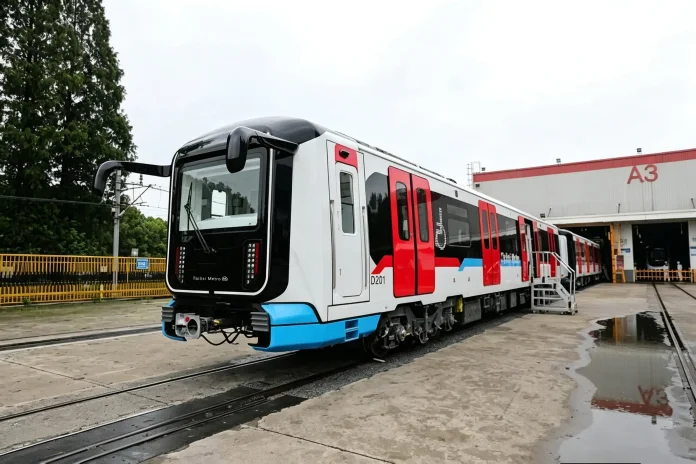
On September 1, 2026, A Subway Train For Tbilisi, The Capital Of Georgia—Manufactured By Crrc And Designed With The Participation Of Our Institute—Was Officially Unveiled At A Crrc Factory. Experts From The Tbilisi Metro Operator Have Arrived On Site To Participate In The Train Testing. This Marks The First Time Crrc Has Manufactured A 1,520-Millimeter Gauge Metro Train For The Commonwealth Of Independent States (Cis) Region. The Train Is Expected To Arrive In Tbilisi In October Or November And Is Scheduled To Enter Service On Line 1 Of The Tbilisi Metro In 2027. This Line Is The Busiest In The Tbilisi Metro Network.
Lecturing at the 'International Training Course on Key Technologies of High-Speed Trains for the Southeast Asia Region'
28 August 2026
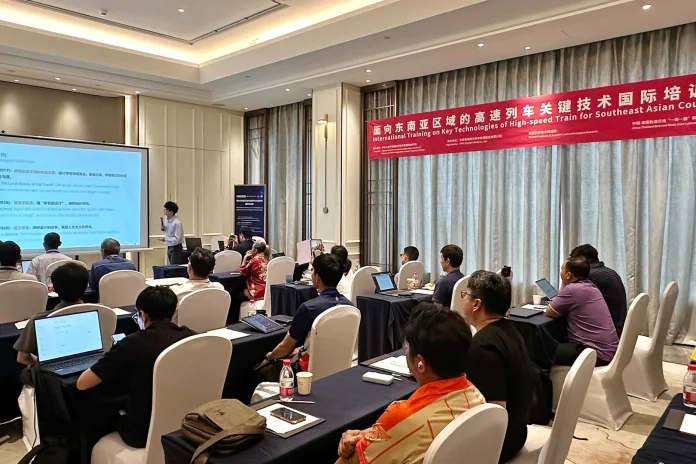
On August 27, 2026, An International Training Program On Key Technologies For High-Speed Trains Targeting The Southeast Asian Region Was Held In Qingdao, China. This Training Program Was Hosted By The Department Of International Cooperation Of The Ministry Of Science And Technology Of The People's Republic Of China, Organized By Crrc Qingdao Sifang Co., Ltd., And Co-Organized By The Thailand Institute Of Scientific And Technological Research And The China-Thailand Rail Transit "Belt And Road" Joint Laboratory. During The Course, Mr. Lin Mao From Our Institute Conducted A Specialized Course Exploring Engineering, Design, And Art Dimensions, Discussing Innovative Thinking And Collaborative Methods From Different Professional Backgrounds, Emphasizing Creativity As A Link To Promote The Integration Of Technology, Functionality, And Experience. By Adopting An Interdisciplinary Perspective, New Ideas Were Provided For High-Speed Train Technology Innovation And Design Practice. This Training Not Only Strengthened The Exchange Of Rail Transit Science And Technology Talents Between Regions But Also Provided An Important Platform To Promote Belt And Road Rail Transit Cooperation And Facilitate The Collaborative Development Of International Railway Technology.
SAIC Motor Experts Visit the Human-Machine-Environment System Design Research Institute for Exchange and Discussion
22 August 2026
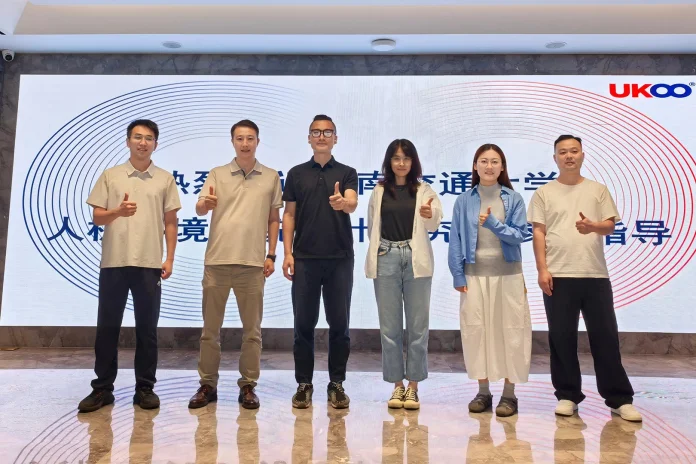
On August 22, 2026, a delegation of experts from SAIC Motor Corporation visited the Institute of Human-Machine-Environment Systems for an exchange, gaining an in-depth understanding of the institute’s research achievements and innovative practices in the fields of rail transit, ergonomics, and intelligent transportation design. Relevant officials and team members from the institute hosted the delegation and conducted in-depth research on the design of future transportation equipment and user-centric domains, contributing their design expertise to the high-quality development of China’s transportation equipment industry.
Our team visited Wuku Zhizao to conduct a specialized survey on train lighting.
23 June 2026
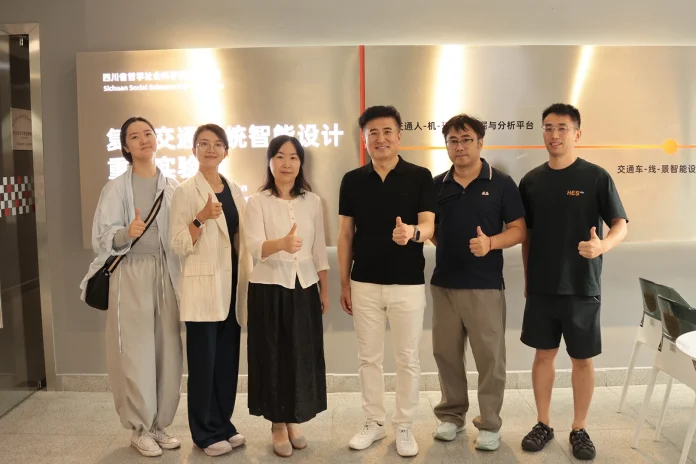
Recently, Our Deputy Director Wang Chao Led A Research Team To Sichuan Wuku Intelligent Manufacturing Technology Co., Ltd. To Conduct An On-Site Investigation Of The Lighting Industry. The Purpose Of This Investigation Was To Provide Systematic Lighting Solutions For The Interior Areas Of Trains And To Deeply Explore The Innovative Applications And Possibilities Of Intelligent Lighting In The Field Of Rail Transportation.
Striving for excellence and ceaseless self-improvement! Happy 130th Anniversary, Southwest Jiaotong University!
15 May 2026
As time caresses the strings of the zither, the years unfold like a scroll. As the tide of the times surges forward, our original aspirations illuminate our journey. One hundred and thirty years of weathering storms, one hundred and thirty years of tumultuous change. Every stroke and every line tells of a glorious past; every word and every phrase embodies the passing of the torch. We keep General Secretary Xi Jinping’s earnest exhortations firmly in mind, uphold the educational philosophy of “pursuing practical learning and engaging in practical endeavors,” carry forward the spirit of the westward relocation, remain steadfast in our original aspiration of patriotism and dedication, and courageously shoulder the mission of our times. By focusing on national strategies, we will let our patriotic spirit shine with an everlasting radiance on this scroll of history.
The First Annual Academic Conference of the Sichuan Provincial Key Laboratory of Intelligent Design for Complex Transportation Systems Was Successfully Held
11 May 2026
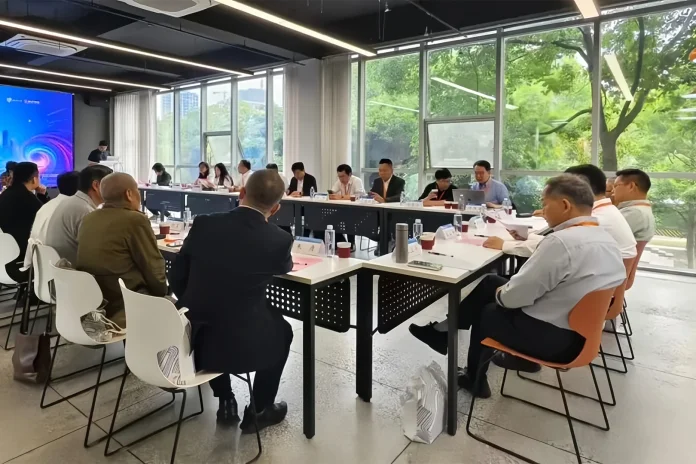
On May 10, the inaugural meeting of the Academic Committee and the Annual Academic Conference of the Sichuan Provincial Key Laboratory of Intelligent Design for Complex Transportation Systems were held at the School of Design and Art at Southwest Jiaotong University. The meeting was chaired by Dai Ning, Party Secretary of the School of Design and Art. Xia Yufeng, Deputy Party Secretary and Secretary of the Commission for Discipline Inspection at Southwest Jiaotong University; Zhang Weihua, Academic Director of the Research Center for Ultra-High-Speed Vacuum Tube Maglev Transportation at Southwest Jiaotong University and Academic Director of the Academic Committee of the Sichuan Provincial Key Laboratory of Intelligent Design for Complex Transportation Systems; and Fu Yonglin, Director of the Advisory Committee of the School of Design and Art, attended the meeting and delivered opening remarks. Xu Bochu, Director of the Institute of Human-Machine-Environment System Design; Wang Chao, Deputy Director of the Institute; and renowned experts and scholars from numerous top-tier universities and enterprises across the country also attended the event.
Upcoming Event
08 May 2026
The First Expert Committee Meeting and Annual Academic Conference of the Key Laboratory of Intelligent Design for Complex Transportation Systems, themed "Big Transportation Design in the Digital Intelligence Era," was organized by the Key Laboratory of Intelligent Design for Complex Transportation Systems and co-organized by the School of Design and Art of Southwest Jiaotong University and other units. The conference featured an Expert Committee plenary session in the morning (09:00–12:00) and an academic forum in the afternoon (13:30–17:15), discussing innovations in transportation system design paradigms and mapping out a new blueprint for transportation design in the digital intelligence era.
The Shenzhen-Huizhou Intercity Dapeng Branch Line train has arrived in Shenzhen
06 May 2026
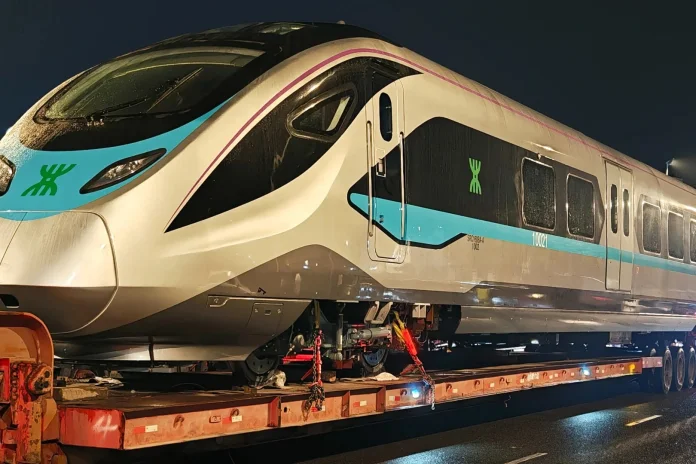
Recently, the first train on the Shenzhen-Huizhou Intercity Dapeng Branch Line, SRC160BA-A-1002, arrived in Huizhou via rail transport from Xiahelong, Changchun, and was then transported by road to the Xinda Depot in Shenzhen’s Dapeng New Area. The Shenzhen-Huizhou Intercity Dapeng Branch Line runs from Longcheng Station in Longgang District through Pingshan District to Xinda Station in Dapeng New Area. The line is approximately 39.4 kilometers long with a design speed of 160 kilometers per hour. It features six stations—Longcheng, Pingshan, Yanzihu, Kuiyong, Dapeng, and Xinda—and includes the Xinda Depot. Once the Shenzhen-Huizhou Intercity Dapeng Branch Line is completed and put into operation, it will enable a 30-minute commute between Dapeng and Longgang or Pingshan. Through transfers, passengers will be able to quickly reach Bao’an Airport, Nanshan, Qianhai, and other areas, which will significantly alleviate the comprehensive transportation pressure in Dapeng New District.
A delegation from Southwest Jiaotong University and CRRC Qingdao Sifang visited Thailand to tour the NSTDA and MTEC
29 April 2026
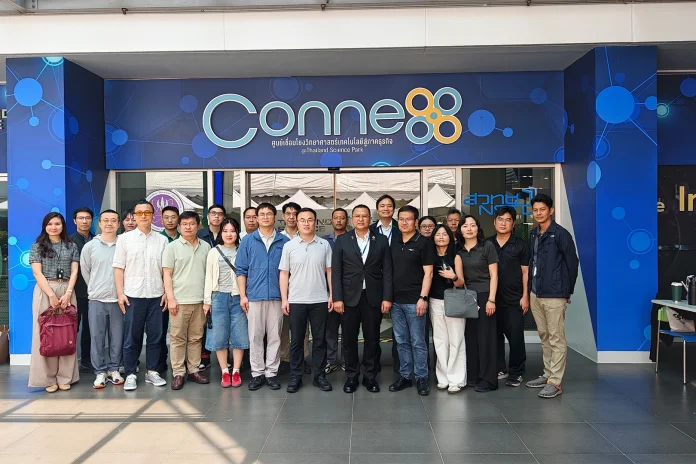
On April 29, 2026, the delegation from CRRC Qingdao Sifang Co., Ltd. and the Human-Environment System Design Lab of Southwest Jiaotong University visited the National Science and Technology Development Agency (NSTDA) and its subsidiary, the National Metal and Materials Technology Center (MTEC) in Thailand, for academic exchanges.
Both sides conducted in-depth discussions on rail transit development, train design, and related fields, and exchanged views on future design development directions.
 IGN
IGN
 Back
Back