Our firm, in collaboration with CRRC Qingdao Sifang, visited the Royal Institute of Technology in Thailand to discuss train exterior paint schemes.
28 April 2026
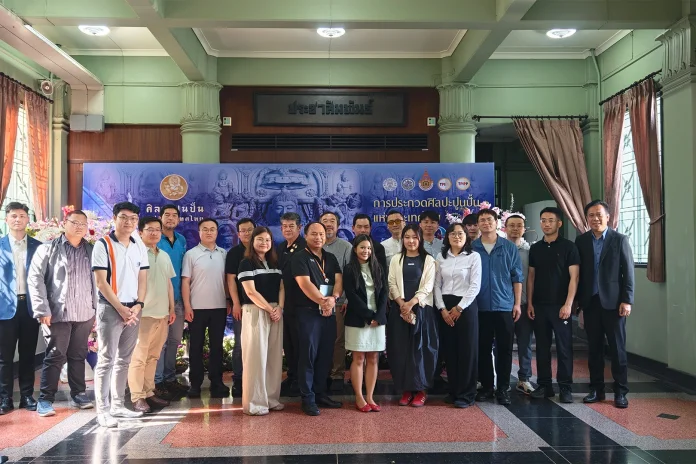
On the afternoon of April 28, 2026, our institute, together with the CRRC Qingdao Sifang delegation, visited the Poh-Chang Academy of Arts, Rajamangala University of Technology Rattanakosin, and held an exchange symposium.
At the symposium, the Thai side presented the preliminary design scheme of train exterior coating patterns incorporating Thai cultural elements. Our institute elaborated to the Thai side on the practical application methods and implementation experience of cultural elements in the project. Both sides conducted in-depth exchanges on design innovation and application practice.
A delegation from Southwest Jiaotong University accompanied CRRC Qingdao Sifang on a visit to Thailand for scientific and technological exchanges
28 April 2026
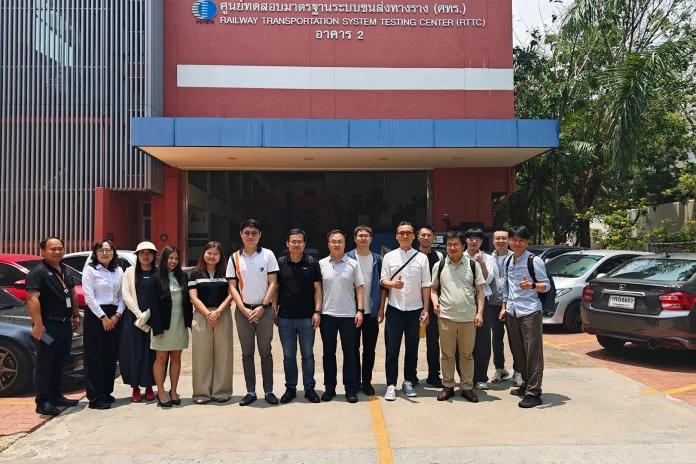
On the morning of April 28, 2026, our institute accompanied the CRRC Qingdao Sifang delegation to visit the Thailand Institute of Scientific and Technological Research (TISTR) for an exchange symposium.
At the symposium, TISTR introduced its overall profile. The Thailand Institute of Scientific and Technological Research is committed to promoting sustainable social development and plays an important role in scientific and technological research in Thailand. Its research fields cover food science, pharmacology, biotechnology, agricultural technology, materials, engineering, environment, ecology, and energy.
After the symposium, the CRRC Qingdao Sifang and Human-Environment System Design Lab of Southwest Jiaotong University delegation visited some laboratories and experimental facilities of TISTR. Both sides conducted in-depth discussions on materials, engineering, and environment.
NVC Lighting × Southwest Jiaotong University Jointly Established the
20 April 2026
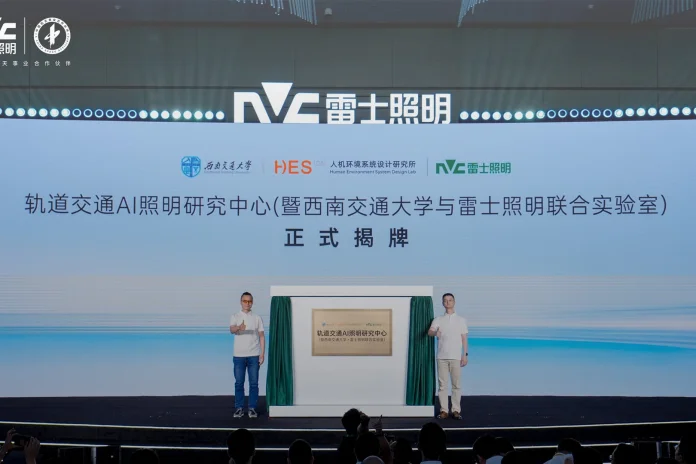
On April 20, at the NVC Lighting Brand Renewal Strategy Conference, the "Rail Transit AI Lighting Research Center" jointly built by NVC Lighting and the Institute of Human-Machine-Environment System Design of Southwest Jiaotong University was officially inaugurated. Led by the team of Deputy Director Wang Chao from the Institute of Human-Machine-Environment System Design, School of Design and Art, Southwest Jiaotong University, the research center will conduct in-depth R&D and application of healthy lighting technologies focused on closed public spaces such as high-speed rail carriages.The conference highlighted two core messages: first, responding to the industry proposition — moving from "arriving faster" to "arriving better"; second, exploring new technological applications — creating "Natural Companion Light" for high-speed rail. This collaboration systematically introduces high-standard healthy lighting technologies to high-speed rail scenarios for the first time, driving the rail transit industry to shift from competition in physical speed to the development of next-generation competitiveness centered on travel experience and health comfort. Through in-depth industry-university-research integration, the research center is committed to integrating healthy lighting technologies into national travel infrastructure, bringing a "sense of health and warmth" to hundreds of millions of passengers.
Upgrade & Renewal| CRRC Sifang's new orient express "Snow Lotus" makes a stunning debut!
20 March 2026
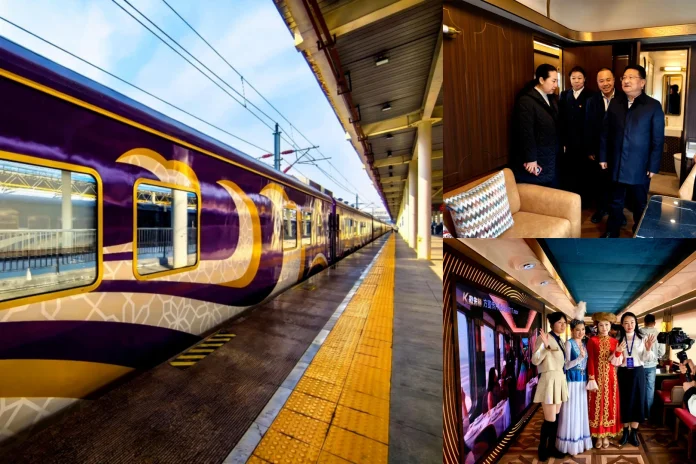
"Eternal Snow Lotus · New Journey on the Silk Road – Xinjiang Railway 2026 Tourism Product & New Orient Express Renovation and Upgrade Launch Ceremony" was successfully held in Urumqi, Xinjiang, where nearly 150 representatives from cultural and tourism enterprises, travel agencies and industry media both inside and outside Xinjiang gathered to witness the upgrading of Xinjiang Railway's tourism products. At the conference, the New Orient Express "Snow Lotus", renovated by CRRC Sifang Co., Ltd., made its brand-new debut, opening a new chapter for exploring the magnificent scenery of Xinjiang.
Beijing-made! First train successfully delivered!
11 March 2026
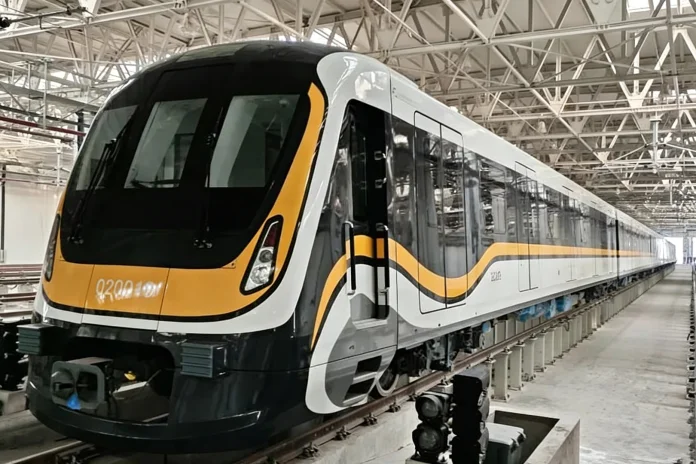
On March 8, the first train of the northern section of Phase 1 of Urumqi Rail Transit Line 2 was successfully delivered. It is a 6-carriage Type A train produced by the Beijing Railway Baoding Intelligent Manufacturing Base. It was transported to Urumqi from nearly 3,000 kilometers away, setting a new record for the longest delivery distance of complete vehicles by the base. The train supports multiple operation modes including automatic driving, and is equipped with intelligent perception, online fault analysis and safety monitoring systems, comprehensively upgrading safety protection. With the delivery of the first train, the project has entered the key stage of vehicle commissioning and system joint debugging. Full efforts will be made to ensure the high-quality opening and operation of the northern section as scheduled. Construction of Urumqi Rail Transit Line 2 started in 2016. The northern section is 13.94 kilometers long with 10 stations. Its opening has been listed in the top ten livelihood projects of Urumqi in 2026, which will further improve urban transportation efficiency.
Great news! Four of our works have won the iF DESIGN AWARD 2026!!
25 February 2026
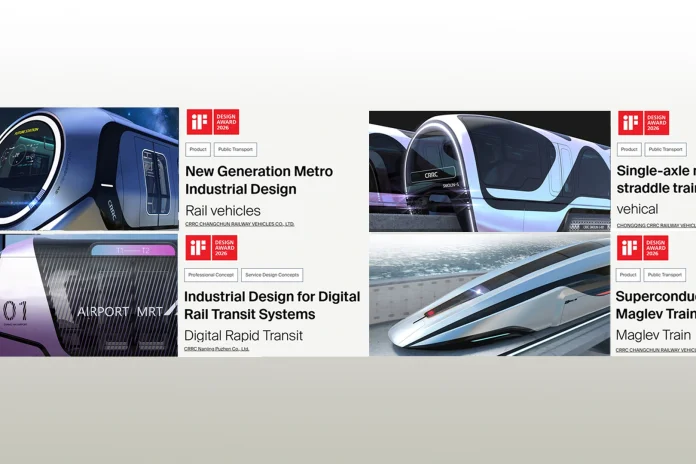
Recently, the iF DESIGN AWARD 2026 selection process concluded with the announcement of its winners. Four projects from the Human-Environment System Design Institute at the School of Design and Art, Southwest Jiaotong University—《New Generation Metro Industrial Design》, 《Single-axle Monorail Straddle Train》, 《Industrial Design for Digital Rail Transit Systems》, and《Superconducting EDS Maglev Train》—stood out among nearly 10,003 entries from 68 countries and regions worldwide, securing awards. This marks the third consecutive year—following 2023 and 2024—that the Human-Environment System Design Institute at SWJTU's School of Design and Art has received this prestigious honor.
Intelligence Empowers, Platform Co-builds | SWJTU and CRRC Changchun Jointly Establish the Green & Intelligent Industrial Design Innovation Research Institute
18 December 2025
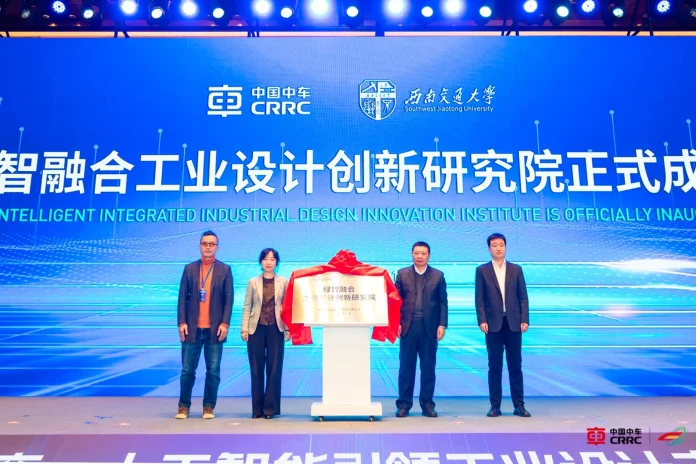
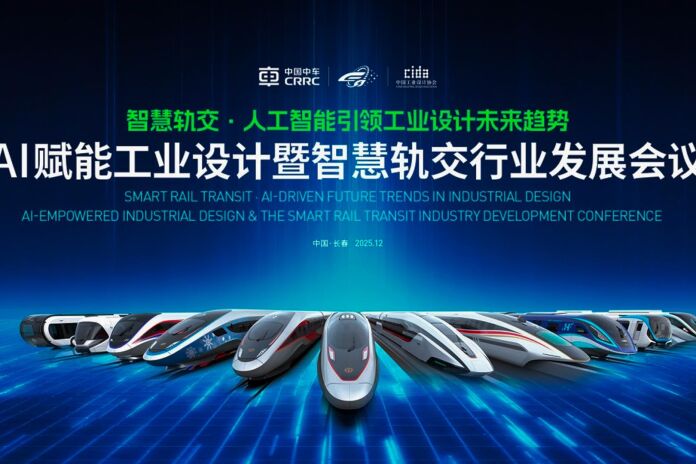
On the morning of December 18, 2025, the "AI Empowers Industrial Design and the Development of the Intelligent Rail Transit Industry" Conference was grandly held in Changchun. At the beginning of the conference, an important cooperative unveiling ceremony was successfully held — Professor Zhi Jinyi, Dean of the School of Design and Art at Southwest Jiaotong University, and Associate Professor Wang Chao, Deputy Director of the Institute of Man-Machine-Environment Systems, jointly represented the university, and together with relevant responsible persons of CRRC Changchun Railway Vehicles Co., Ltd., officially unveiled the "Green and Intelligent Integrated Industrial Design Innovation Research Institute" co-established by both parties.
The establishment of this research institute marks that the School of Design and Art at Southwest Jiaotong University has entered a new stage of development in industry-university integration and collaborative innovation in the field of green and intelligent rail transit design. It will build a high-level and professional cooperation platform for discipline talent training, core technology research and development, and the industrial transformation of scientific research achievements.
HES secures one Gold and one Silver at the 2025 CRRC Changchun International Design Challenge
18 December 2025
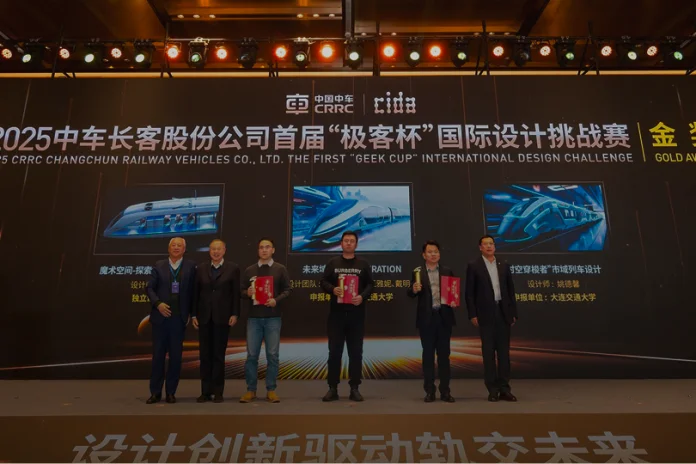
With the theme of "Design Innovation Driving the Future of Rail Transit", the 2025 CRRC Changchun International Design Challenge solicited innovative designs for future intercity trains globally. The competition attracted numerous participants from across the country, with a total of 338 entries received. In the final, the Institute of Man-Machine System & Environment, Southwest Jiaotong University stood out and won one gold and one silver award.
Institute of Human-Machine Systems and Environment, Southwest Jiaotong University was invited to participate in the Conference on Artificial Intelligence Empowering Rail Transit Industry Development
18 December 2025
On December 18, 2025, the Conference on Artificial Intelligence Empowering Industrial Design and Intelligent Rail Transit Industry Development was grandly held. As an invited academic institution, the Institute of Human-Machine Systems and Environment, Southwest Jiaotong University participated in the conference, conducted in-depth discussions with experts from multiple universities and enterprises, and jointly explored new pathways for artificial intelligence to empower industrial design and the development of intelligent rail transit.
China's First Panda-Themed Straddle-Type Monorail Train Debuts in Chongqing
19 June 2025
On June 18, reporters learned from the China (Chongqing) Monorail Transit Development Achievements Exhibition and Promotion Conference & the "2025 International Monorail Transit (Chongqing) Sustainable Development Forum" that up to now, the city has put into operation 14 urban rail transit lines, including monorail and metro, with a total operating mileage of 575 kilometers.
According to the relevant person in charge of the Rail Transit Operation Company of Chongqing Transport Development & Investment Group, the new-generation straddle-type monorail train is the first "Panda-themed" straddle-type monorail train in China. It adopts the classic black-and-white color scheme of giant pandas, with its front designed in the shape of a panda head, panda patterns painted on both sides of the body, and a streamlined body profile.
The train is designed with large-area sightseeing glass windows and equipped with a panoramic sunroof on the roof, allowing passengers to enjoy the unique mountain-city scenery from multiple angles during the journey. It will become a lovely and lively mobile scenery line in the city.
 IGN
IGN
 Back
Back